Someone always ends up organizing it. A birthday that started at six people and is now at eleven. A work dinner where half the team is flying in and the other half just wants somewhere good. A reunion where nobody can agree on cuisine, but everyone agrees they want to actually talk to each other, not shout over a DJ. Whoever ends up holding that group chat knows the real challenge isn’t finding a restaurant — it’s finding the right one for a table that size.
New York has thousands of restaurants, but only a fraction of them are genuinely built to handle a group well. The good news is that once you know what to look for, the search gets a lot shorter — and the dinner gets a lot easier.
Why group dinners in NYC are harder to plan than they should be
Most restaurants in Manhattan are designed around tables of two or four. Space is expensive, and dining rooms are laid out to maximize covers, not to host a party of twelve comfortably. That means a lot of places that are wonderful for a date night simply don’t have the floor plan, the kitchen capacity, or the staff training to handle a large group without something going wrong — slow service, a kitchen that falls behind, a table that feels like an afterthought wedged into a corner.
On top of that, larger groups bring built-in complications: different budgets, different dietary needs, someone who’s running late, someone who wants to split the check four ways. None of that is unusual. What separates a smooth group dinner from a stressful one is whether the restaurant has actually thought through how to handle it.
What actually makes a restaurant good for groups
A handful of factors consistently separate a restaurant that’s merely willing to seat a group from one that’s genuinely set up for it.
Capacity without feeling crowded
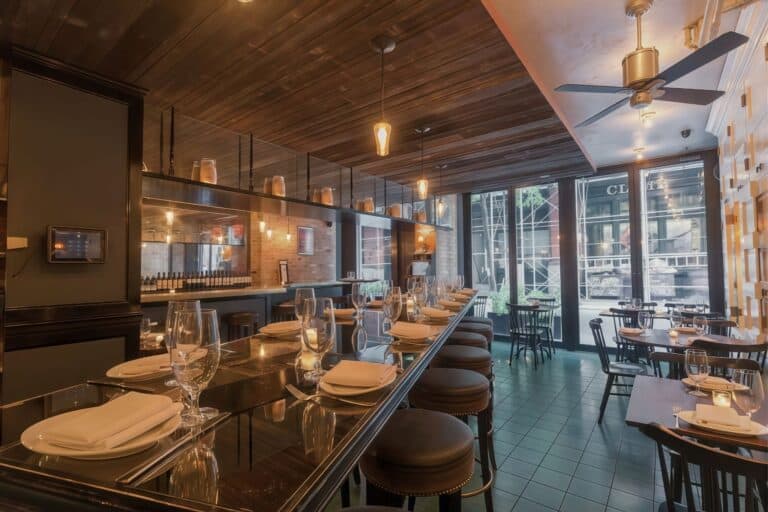
The first question is simple: can the space hold your group without everyone bumping elbows? A restaurant that’s technically large enough on paper can still feel cramped if the tables are packed too close together, or if your group ends up split across two separate tables that can’t really talk to each other. Look for a dedicated long table, a private room, or a layout that was actually designed with bigger parties in mind — not a collection of two-tops pushed together at the last minute.
A menu format built for sharing
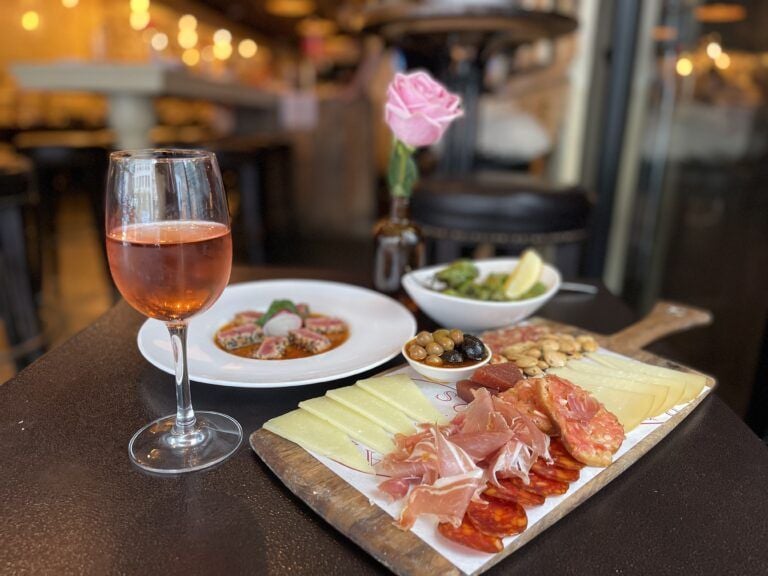
Ordering eleven individual entrées is its own kind of chaos — different cook times, different courses arriving at different moments, half the table finished while the other half is still waiting on their food. Restaurants that handle groups well tend to default to a format built around sharing: family-style courses, a fixed selection of dishes portioned to the size of the party, or a menu structured so the kitchen can fire everything at once instead of staggering a dozen separate orders.
A team that knows how to pace a big table
This is the factor that’s hardest to see in advance but matters the most once you’re seated. A server who’s used to large parties knows how to take a coherent order from twelve different people, how to time courses so the table eats together, and how to handle a check that needs splitting six ways without holding up the whole room. Restaurants that host groups regularly tend to have this dialed in; ones that don’t will show it the moment things start to feel disorganized.
Private rooms vs. a big table in the main room
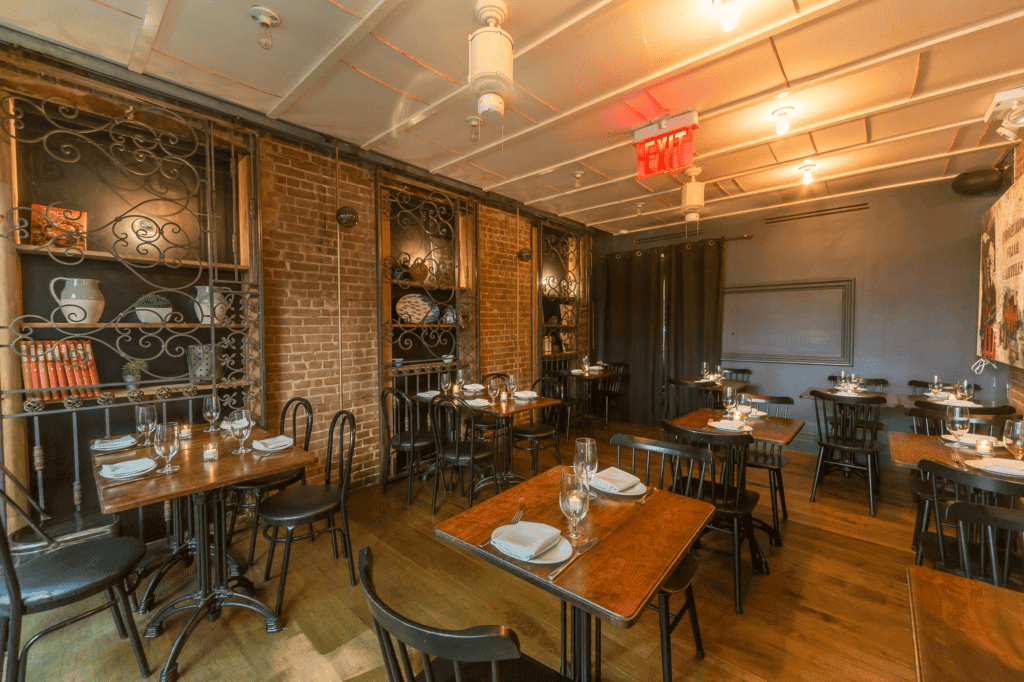
Once a restaurant clears those basics, the next decision is where exactly to sit. A private dining room gives a group its own space — useful for a milestone birthday, a rehearsal dinner, or a work event where you don’t want the rest of the restaurant in your business. Private rooms typically run smaller, more curated menus and come with a flat per-person structure that makes budgeting easier to plan in advance.
A long table in the main dining room, on the other hand, keeps the group inside the restaurant’s regular energy — louder, more social, part of the room rather than separate from it. It’s usually the better fit for a celebratory dinner where the point is to soak up the atmosphere, not retreat from it. Neither option is objectively better; it depends on whether your group wants privacy or wants to be part of the noise.
For groups in the 10-to-30 range, most well-run NYC restaurants offer one or the other. Larger groups — 50 guests and up — usually need to look at a full restaurant buyout, which gives total control over the space, the menu, and the schedule, but requires booking significantly further in advance.
Why shared-plate formats work better than ordering individually
The single biggest upgrade a group dinner can make is choosing a restaurant built around shared plates rather than individual entrées. When everyone orders separately, the table eats in waves — some people halfway through their meal while others are still waiting for theirs to arrive. A shared format flips that: dishes land in the center of the table as they’re ready, everyone serves themselves, and the meal moves at the pace of conversation instead of the pace of the kitchen.
This format also solves the dietary-needs problem almost automatically. Instead of one vegetarian guest stuck with a single sad option on an otherwise meat-heavy menu, a shared spread naturally includes a wider range of dishes that everyone can pick from. Nobody has to apologize for a special request, and nobody ends up watching everyone else eat something they can’t.
How to book a group dinner the right way
Booking for a group is genuinely different from booking a table for two, and treating it the same way is the most common mistake. A few things make the process smoother on both ends.
Book early. For groups of ten or more, four to six weeks ahead is a reasonable target, especially for weekend dates or anything during a busy season — holidays, graduation weeks, the lead-up to major events. Restaurants that handle private dining well will usually let you reserve with an estimated headcount and finalize the exact number closer to the date, which takes the pressure off chasing down stragglers in your group chat before you can confirm anything.
Be upfront about the basics when you reach out: party size, preferred date and time range, whether you’re open to a private room or would rather sit in the main dining room, and any dietary restrictions across the group. Restaurants that host groups regularly are used to working through these details quickly — the more organized the initial ask, the easier it is for them to tell you exactly what’s realistic for your size and date.
Finally, ask about the menu structure before you commit. A fixed, pre-selected family-style menu (like the tiered options at Socarrat) makes budgeting straightforward and takes the ordering chaos out of the equation entirely — useful information to have before the night of, not after the bill arrives.
Choosing the location for your group
Where you land often comes down to who’s coming and why. A work dinner with clients flying in might call for a private room close to Midtown hotels and transit. A birthday with a mostly downtown crowd might be better served by a livelier, more communal space. A rehearsal dinner might want both privacy and a sense of occasion in the same evening.
The good news is that a shared-plate restaurant built for groups tends to flex across all of these. Whether the night calls for a quiet private room or a long table in the middle of the action, the format does the heavy lifting — everyone eats well, nobody’s left out, and the table actually gets to spend the evening talking to each other instead of negotiating who ordered what.