If you’ve spent any time around Spanish food in New York, you’ve likely encountered both words on menus — sometimes in the same restaurant. Tapas and pintxos are often used interchangeably in American dining, which is understandable but not quite accurate. They come from different parts of Spain, follow different service traditions, and carry distinct cultural identities. Understanding the difference doesn’t make you a food snob. It just makes the meal more interesting.
Two traditions, one country
Spain is not a monolithic food culture. The country has 17 autonomous regions, each with its own cuisine, ingredients, and dining customs shaped by geography, history, and — in the case of the Basque Country — a language that predates any other in Europe. Tapas belong to the south and center of Spain. Pintxos belong to the north, specifically the Basque Country and its surrounding regions. They emerged independently, from different social rituals, and they are still regarded very differently by the people who grew up eating them.
The conflation of the two is largely an export phenomenon — outside of Spain, “tapas” has come to mean any Spanish small plate, which can make a Basque person twitch. But in New York, both traditions have found genuine expression, and knowing what you’re eating sharpens the pleasure of eating it.
What are tapas?
The word “tapa” comes from the Spanish verb tapar, to cover. The most common origin story traces it to Andalusia, where bartenders began placing small pieces of bread or cured meat on top of wine or sherry glasses to keep out the flies. Whether or not the etymology is exactly right, the practice took hold: a small bite served alongside a drink, free of charge, as a gesture of hospitality.
That freebie tradition has largely disappeared from modern Spanish bars — today, tapas are almost always ordered and paid for separately — but the spirit remains. A tapa is food designed to accompany a drink and extend the social hour before a proper meal. In Spain, dinner typically happens between 9 and 11 PM. Tapas fill the gap.
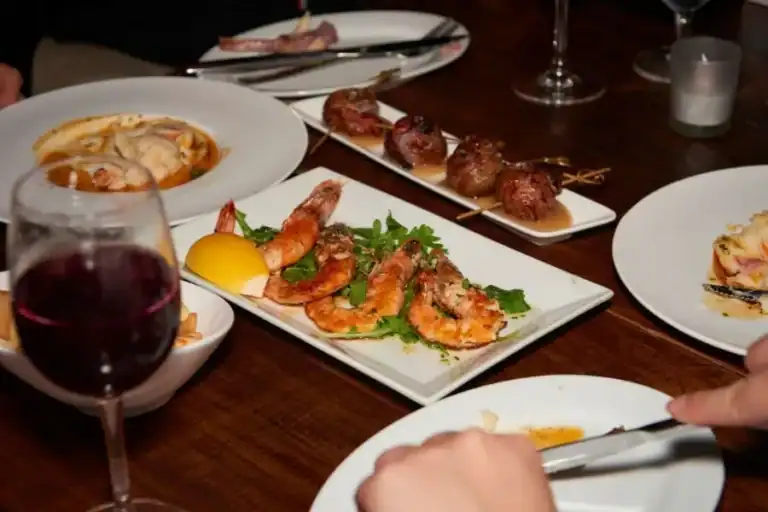
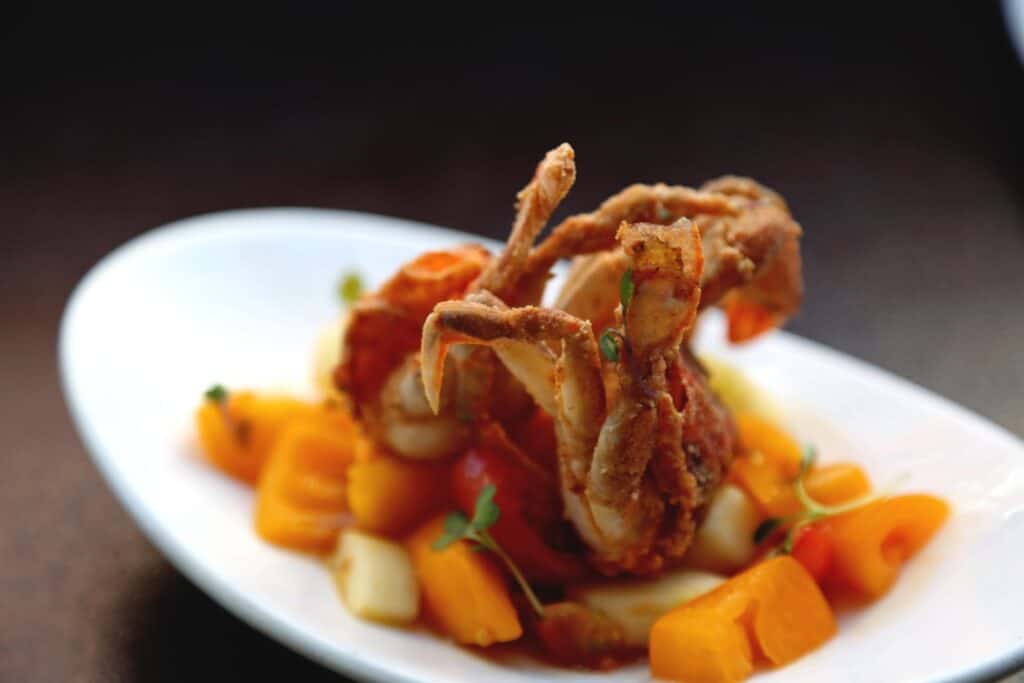
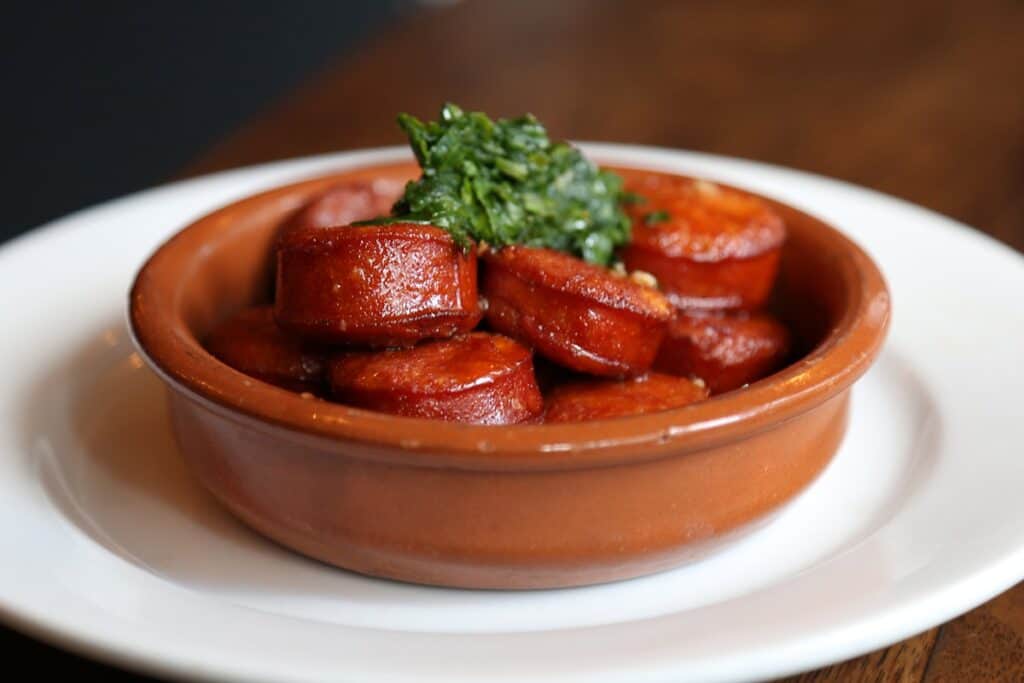
In format, tapas are shared plates: cured meats, cheeses, fried dishes, braised preparations, grilled seafood. They arrive at the center of the table and are passed around. There’s no fixed portion size or presentation rule — a tapa can be a small ceramic bowl of patatas bravas, a plate of jamón, or a miniature version of a full dish like paella or tortilla española. The defining feature is the social, communal way of eating them.
What are pintxos?
The word “pintxo” — written “pincho” in Castilian Spanish, but always “pintxo” in the Basque Country, and the Basque spelling matters to the people who make them — comes from the verb pinchar, to pierce or spike. It refers to the toothpick or skewer traditionally used to hold the ingredients in place on a slice of bread.
Pintxos originated in the bars of San Sebastián and Bilbao, where bar counters were lined with small pieces of bread topped with everything from anchovies and peppers to more elaborate combinations of seafood, cured meats, and sauces. Customers would pick them from the counter, eat standing at the bar, and pay at the end by counting the toothpicks left beside their glass.
The Basque Country has the highest concentration of Michelin-starred restaurants per capita in the world, and that culinary ambition filters down to the pintxo bar. What began as a humble counter snack has evolved, in many bars, into something closer to miniature haute cuisine — single-bite constructions with gourmet ingredients and precise presentation. The gilda, perhaps the most iconic pintxo, is a beautiful example: an anchovy, a pickled pepper, and an olive threaded onto a toothpick. Three ingredients, one perfect bite.
The real differences between tapas and pintxos
Set side by side, the distinctions become clear:
- Origin. Tapas are rooted in southern and central Spain (Andalusia, Madrid, Castile). Pintxos are from the Basque Country and neighboring regions of northern Spain.
- Format. Tapas are typically shared plates served at the table. Pintxos are individual portions — one bite or two — usually served on bread, meant to be eaten standing at a bar or in a few bites at most.
- Service. In traditional tapas bars, food arrives at the table after being ordered. In traditional pintxo bars, the food is often already displayed on the counter and customers help themselves, tallying at the end.
- Occasion. Tapas are eaten sitting down, as part of a social meal. Pintxos are more associated with the Basque tradition of txikiteo — bar-hopping from one pintxo bar to the next, glass of wine in hand, standing and talking.
- Bread. Pintxos almost always involve a slice of bread as the base. Tapas rarely do — when bread appears with tapas, it’s usually pan con tomate or an accompaniment, not the structural element of the dish.
In practice, the lines blur. Many modern Spanish restaurants serve both under the same menu, and some Basque-influenced places in New York use the two terms interchangeably. But the cultural distinction is real, and the best Spanish restaurants in the city tend to respect it.
Where to find pintxos in NYC
New York has a small but genuine Basque dining scene, with pockets in the Lower East Side, Chinatown, and Chelsea. If you want to experience pintxos in their most traditional form — individual bites on bread, eaten standing at a bar, with a glass of Txakoli or vermouth — the city has a handful of places that take the format seriously.
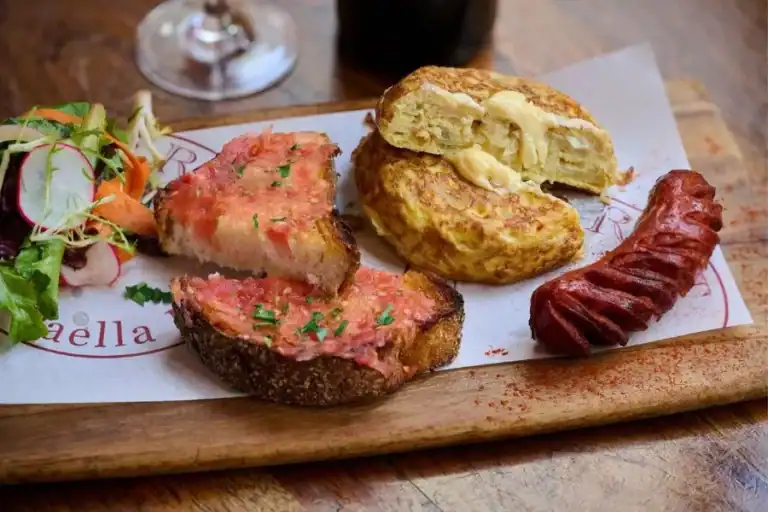
The classic pintxos to look for are the gilda (anchovy, pickled pepper, olive on a toothpick), the matrimonio (two anchovies, salted and pickled, on bread), and the tortilla pintxo — a slice of potato omelette on a piece of toast, which is one of those dishes that travels well across both the tapas and pintxo traditions. Beyond those, Basque bars tend to feature bacalao preparations, jamón ibérico, and seasonal combinations that lean heavily on the region’s love for seafood and preserved fish.
Worth noting: pintxo bars in New York are generally small, often packed, and best experienced on a weeknight when you can actually see the counter. The format rewards curiosity — the best bites are sometimes the ones you pick up without knowing exactly what’s in them.
Where to find tapas in NYC — and how pintxos sometimes appear on the menu
For tapas in the fuller Spanish tradition — the shared plates, the paella at the center of the table, the wine poured without ceremony — Socarrat Paella Bar is one of the most consistent options in Manhattan. The menu at all three locations (Chelsea, Midtown East, and Nolita) is built around sharing: croquetas, patatas bravas, gambas al ajillo, pulpo a la gallega, and the signature paellas that give the restaurant its name.
Among the tapas, the pintxo de tortilla appears — a classic Spanish potato and caramelized onion omelette served on toast, exactly the kind of bridge between the two traditions that feels natural at a table in New York. It’s a tapa in format, a pintxo in name, and one of the better single bites on the menu. At Socarrat Nolita, it pairs particularly well with a glass of Albariño before the paella arrives.
The broader point is that Spanish food in New York is more varied than it first appears. Tapas and pintxos represent two distinct windows into a country with enormous regional diversity — and both traditions are worth exploring on their own terms, not just as interchangeable small plates.