Every year, as February arrives and winter begins to soften, cities across Europe glow with candlelight, handwritten notes, and long dinners shared at home and in restaurants between lovers, friends, and families. Valentine’s Day is often imagined as a commercial holiday filled with roses and chocolate boxes, but its roots — and its most beautiful expressions — are deeply connected to European traditions centered on storytelling, food, and shared time.
In Spain, Italy, France, and across the Mediterranean, love has always been celebrated not just through gifts, but through experiences: long conversations at the table, shared plates, wine poured slowly, and the pleasure of simply being together.
And perhaps that’s why Valentine’s Day, when celebrated the European way, feels less like a performance and more like a memory in the making.
Let’s travel back in time to understand how this day became what it is — and how you can experience it with a Mediterranean spirit, bringing these traditions even to cities like New York today.
A Brief Journey Through Valentine’s History
The story begins in ancient Rome. The holiday traces its origins to Saint Valentine, a priest who, according to legend, secretly married couples at a time when Emperor Claudius II had banned marriage for young soldiers, believing single men made better warriors.
Valentine defied the order, believing love was worth protecting. He was eventually imprisoned and executed around the year 269 AD, becoming a symbol of devotion and sacrifice.
Centuries later, in medieval Europe, poets and writers began associating February 14 with romantic love. Geoffrey Chaucer’s writings helped connect the date with courtship traditions, and by the 15th century, people were exchanging love letters across England and France.
But unlike today’s fast celebrations, European romance was slower. Love unfolded through letters, shared meals, and evenings that stretched into night.
And food, naturally, played a central role.
Why Food Makes Valentine’s Day More Meaningful
Food and memory are deeply connected. Studies in psychology show that shared meals strengthen social bonds and emotional connection because eating together encourages people to slow down and engage with one another.
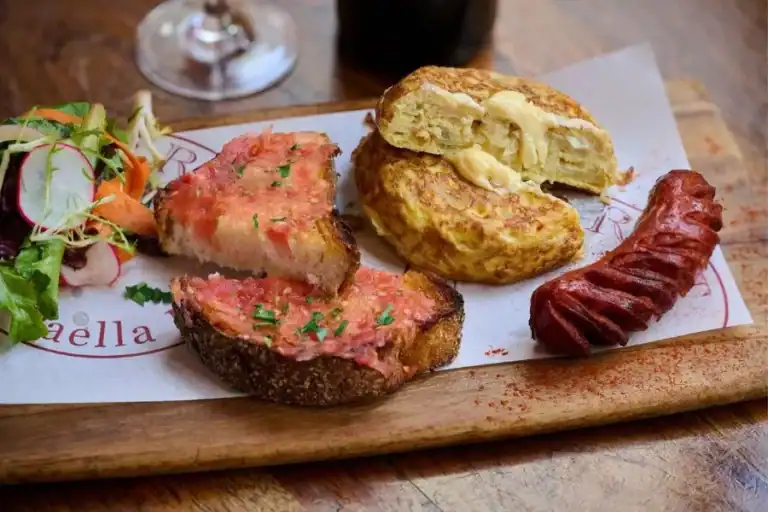
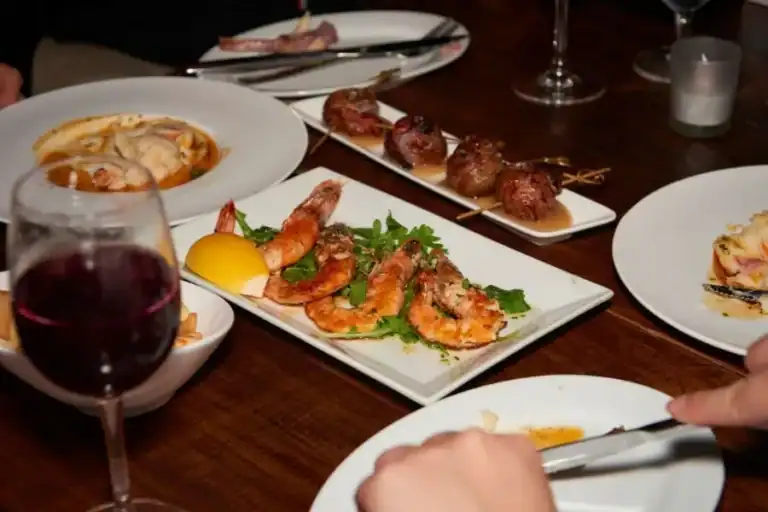
Mediterranean cultures have long embraced this instinctively. Meals are rarely rushed; courses arrive gradually, and guests linger at the table.
In a fast-paced world, Valentine’s Day becomes a rare opportunity to pause and reconnect through something simple: sharing food and time.
Celebrating Love the Mediterranean Way
Across Europe, traditions differ, but the message is similar: experiences matter more than objects. In Barcelona, for example, Sant Jordi’s Day in April celebrates love and culture through the exchange of books and roses. In Italy and France, couples often celebrate with dinners or short escapes to romantic towns.
But the Mediterranean lesson applies anywhere: slow down, share food, and enjoy uninterrupted time together.
You don’t need grand gestures to create a memorable Valentine’s evening. Choose a place where conversation flows, order dishes meant for sharing, and stay longer than planned. Whether celebrating with a partner or friends, turning dinner into an experience — rather than just a reservation — often becomes the most meaningful gift.
Because sometimes, the best way to celebrate love is simply around a table, with good food, good company, and no rush to leave. Book early and celebrate love slowly this Valentine’s Day.